Brands and influencers are most certainly hyped right now. It’s Amazon Prime Big Deal Days, and the conversations are flowing in households and offices over what to buy and whether now is the time to buy. Even in our office, we talked about what we cannot buy locally and what we need to purchase. Inevitably, the question became whether something that saves us ten minutes but then sits in a drawer was ever a deal. And in true fashion, I started thinking about this week’s From Lab to Desk article. I’d had AI adoption in mind, but Prime Big Deal Days really got me thinking about what we buy and how long it takes to get used.
Sitting unused is one way to waste a deal. Costing more than it saves is another.
Adopted is not the same as absorbed
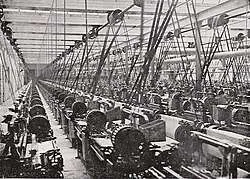
In the 1800s (that feels nice to say, since some young person hit me with the born-in-the-1900s joke the other day), most factories ran on steam. Electric light was on the market by 1879, and the first central power stations opened in the early 1880s. Almost twenty years later, in 1899, we had electricity, but electric motors supplied less than five percent of the mechanical drive in US factories. When owners did switch, many pulled out the steam engine and bolted in one giant electrical component to take its place. Same belts. Same shafts. Productivity barely moved.
It took until the 1920s, about forty years after those first power stations, for factories to give each machine its own motor and rebuild the floor around it. That is when productivity finally jumped.
I keep coming back to how long something we buy takes to reach full use, because we are standing in that same place today with AI.
But what happens when we do adopt the technology?
Tech fatigue is not new
In 1881, a physician named George Beard blamed steam power and the telegraph, among other things, for what he called American Nervousness. He said some other off-the-wall things, but that observation holds up: a new tool can wear people out.
The modern version of the problem arrived this past March. Harvard Business Review published a study in early 2026 from researchers at BCG and UC Riverside called “When Using AI Leads to Brain Fry.” They surveyed 1,488 full-time US workers and defined brain fry as mental fatigue from using, interacting with, or overseeing AI tools beyond your cognitive capacity. Fourteen percent of workers using AI said they had felt it. Marketing had the highest rate, with more than a quarter of respondents reporting it. Workers with brain fry also made more mistakes: 11 percent more minor errors and 39 percent more major ones.
Two details stood out to me.
First, using AI to take over routine, repetitive tasks was linked to less burnout, while heavy AI oversight added strain. Same technology, opposite results, depending on what it took off your plate and what it put back on. (If your new tool saves you ten minutes of writing and costs you twenty minutes of checking, that is not a time saver. That is a job change nobody announced. Read that twice and share with a colleague or your boss.)
Second, the people most at risk were the ones juggling several tools or overseeing several AI agents. In other words, the early adopters and the most excited people in the building carry the most risk. Enthusiasm is not enough to protect you from technology fatigue. The person who volunteers to try everything is often the person who ends up reviewing everything.
Somebody has to do the Hopper work
If you read the last issue, you know where this is going. Ada Lovelace saw that a machine could work with symbols, and Grace Hopper built the bridge that let ordinary people talk to it in something close to their own words. The idea was never the hard part. The translation was.
Every organization buying AI right now needs someone doing that translation work, and a leader willing to redesign the workday around the tool instead of laying the tool on top of it. The HBR authors point to a clear AI strategy, manager support, team integration, and workload management as the practices that help. Notice that none of those are a software license or login account.
So before the next rollout, try three questions:
- What do we expect this tool to do for us?
- What did we stop doing when we started using this tool?
- Who owns the redesign of the work around it?
If the answer to the second one is “nothing,” the new tool is a second layer on top of the old workload, and your people are the ones holding it up. If the answer to the first one is “it was a good deal,” ask: what did we buy?
When your team says it has adopted AI, what would it take to know that anyone’s day got better?
Ebony Vaz (Head of Musings at Above Promotions)
Subscribe to From Lab to Desk to receive bi-weekly musings on technology from creation to use.
(Previous articles of From Lab-to-Desk appear here.)
Sources
- Paul David, “The Dynamo and the Computer” (1990)
- History News Network on David’s findings
- Beard, American Nervousness (1881), excerpt
- Harvard Business Review, “When Using AI Leads to Brain Fry,” March 5, 2026
- BCG summary of the HBR article
- Axios on the brain fry research
- The Independent on the error-rate findings